
They come for us translators because translators are a threat to authoritarianism
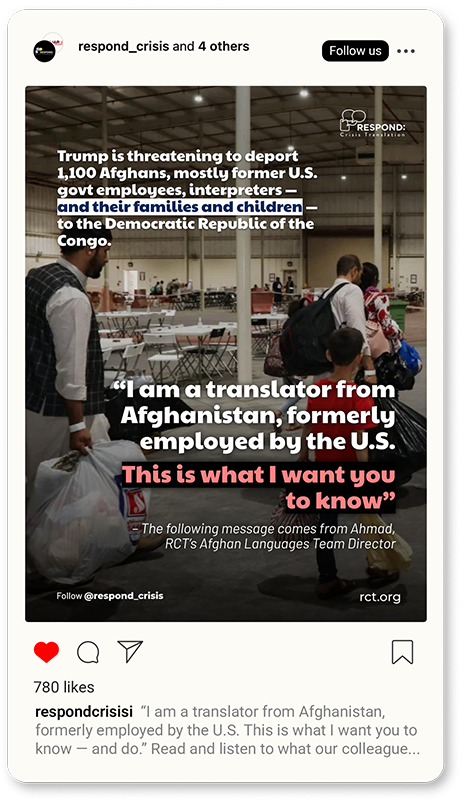
Trump is threatening to deport 1,100 Afghans, mostly former U.S. govt employees, interpreters — and their families and children — to the Democratic Republic of the Congo.
“I am a translator from Afghanistan, formerly employed by the U.S. This is what I want you to know” – The following message comes from Ahmad, RCT’s Afghan Languages Team Director

“They come for us translators because translators are a threat to authoritarianism. They want to silence migrants, they want to silence the oppressed – and so, they target translators.
From Meenu Batra, detained by ICE in retaliation for her interpreting work in Texas, to Palestinian translator Refaat Alareer, assassinated in retaliation for telling the story of Gaza to the world, to Zahra Mohammadi, jailed for years for the “crime” of teaching her native Kurdish language in schools, to thousands of Afghan translators like me, trapped, persecuted, and killed at the hands of both regimes – the U.S. and the Taliban.”
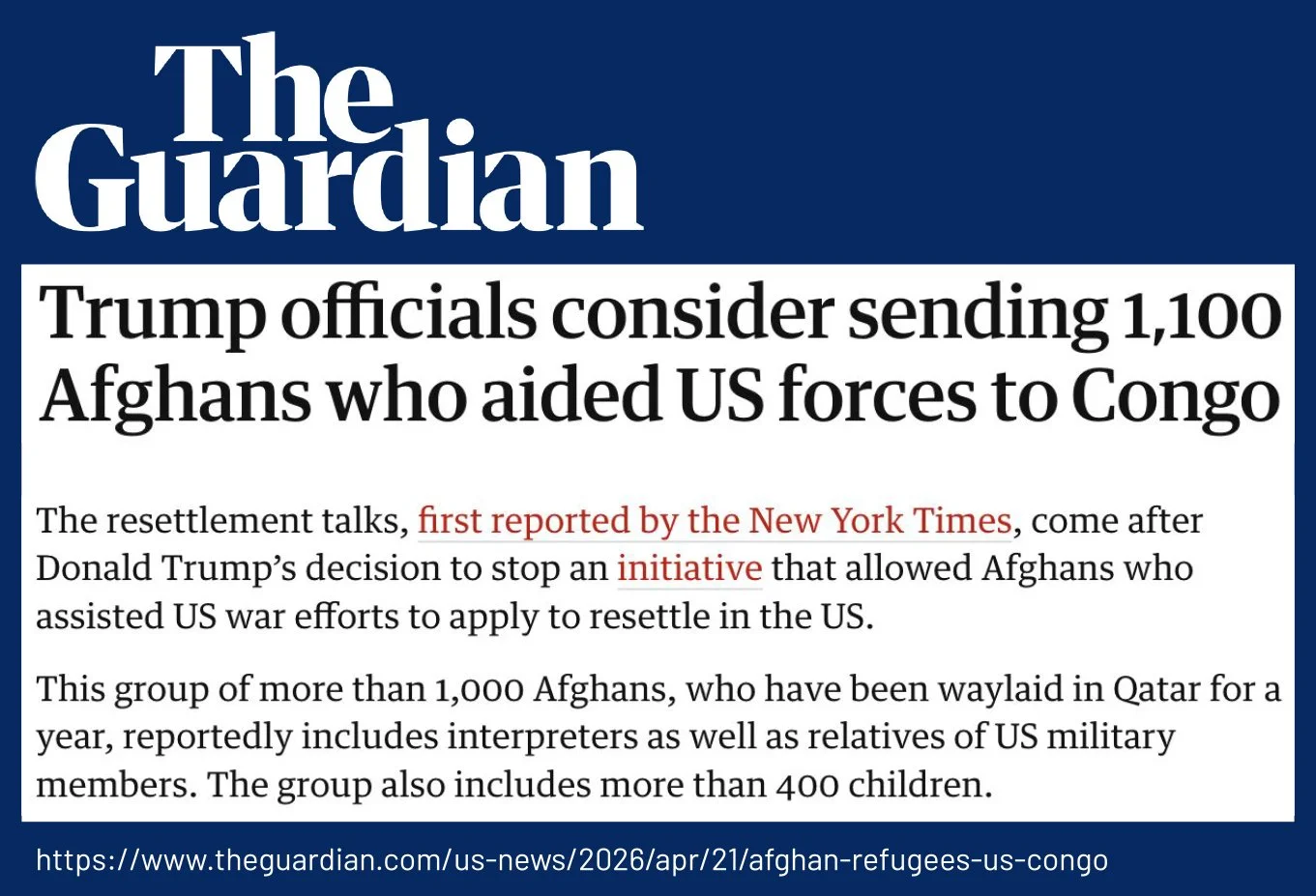
This cruel maneuver is one of countless examples of the U.S. government’s abandonment and endangerment of the Afghan people whom it formerly employed.
Specifically, the endangerment of Afghan interpreters has been a constant.
But it is often overlooked.
Ahmad: “I am a translator from Afghanistan. I was approved to come to the U.S. through the years-long UNHCR refugee resettlement process. This meant safety and peace around the corner at last for me and my family. But once Trump came to power, my resettlement was derailed. Like thousands of fellow Afghans, I had my hope shattered overnight. The plans I had worked on for years were derailed. Since then, I have been in limbo, living in a country where Afghans are persecuted, hunted down, and forced to live in hiding with no lights and padlocks on our doors. We are under constant threat of capture and deportation — simply for being Afghan.
In my neighborhood, my family feels very alone, because all of our Afghan neighbors have been captured.
We Afghans refuse to let our spirits break because our only choice is to keep fighting for each other.
Even though I live in hiding, I still work full-time as a crisis translator. As RCT's Afghan Languages Team Director, I manage the translation of asylum claims and other critical legal interventions for Afghan asylum seekers around the world. Our work creates jobs for fellow Afghan translators left without homes and without work after the U.S. forces abandoned us.
The U.S. government made Afghanistan and its diaspora a site of crisis and broken promises for translators. The consequences of the U.S. failure in Afghanistan continue to haunt our lives.
The U.S. fails, and we, a grassroots organization, are picking up the pieces.
U.S. forces, during their 20 years of rule, used human rights and language workers like me to support their occupation. The U.S. employed us for years, but refused responsibility for our well-being. They even rejected countless Afghan translators’ asylum claims. The translators of Afghanistan were left trapped, vulnerable to grave violence by the Taliban, which persecuted translators.
Many of us have been forced into hiding to avoid death under the Taliban. Meanwhile, Afghan refugees trying to build their lives outside Afghanistan have been branded “enemies of the state” in nearby countries — from Pakistan to Iran to Tajikistan.
There is nowhere in the world where it is safe to be Afghan. Afghan migrants are facing threats to their lives. They need translators to communicate their cases and advocate for safety in legal systems that prey on mistranslations to justify dismissing them. Language deprivation makes it possible to disappear people.
Afghan translators are critical in the fight against the forced erasure we are living under — the figurative and literal disappearance of our people.
But we are being persecuted in Afghanistan, in the U.S., and everywhere. We need funding. We need support. We need relief. We deserve to be seen.
I ask you to:
Support Afghan Translators: We are the lifelines for millions whose voices have been silenced. Visit our website rct.org and learn about how you can send mutual aid funds directly to Afghan translators and their families at risk of deportation, so they can continue their critical work and survive: .bit.ly/rct-donate
Ensure Afghans can access language support: The Afghan Languages Team at Respond Crisis Translation supports Afghan individuals, families, and communities with crucial translation and interpreting: bit.ly/rct-need-support
Follow Afghan organizations in Instagram and amplify Afghan voices:
@zakira_ras
@afghanlgbt
@womenleadingpeace
@bread_work_freedom
@afghan_evac
@afghanamericancommunityorg
@fereshtaabbasi
@theafghan
@projectanar
@afghansempowered
@hoda_khamosh
@afghansforabettertomorrow
@rehanjajiAdvocate for protection and pathways to citizenship for Afghan refugees around the world.
Comment with messages of support to share with Afghan translators on our team and with more organizations to follow, and with ideas about how all of us can keep taking action for Afghans.”